

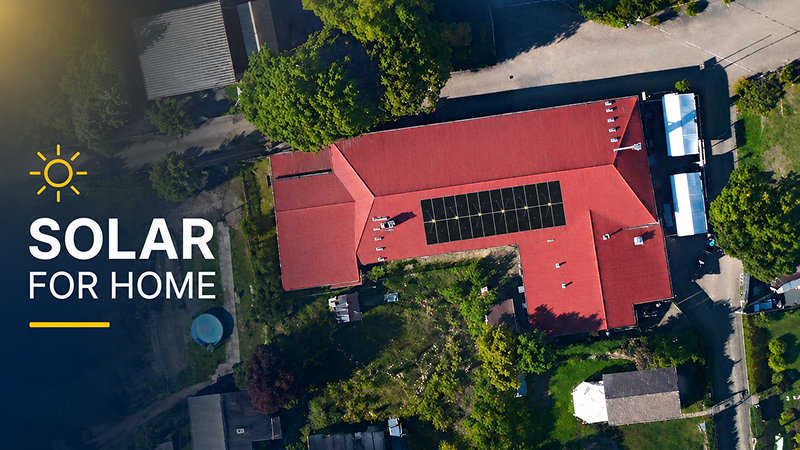

Considering the potential issues that may need to be addressed, we can summarize and outline five basic steps for designing a household or small-scale photovoltaic system:
Step One:Project Location and Pre-design
Clarify the specific address of the project, whether the project needs to be grid-connected, what type of power grid it is, and the basic scale of electricity consumption, etc., to determine some basic information about the required photovoltaic system.
Step Two:Modeling and Module Placement
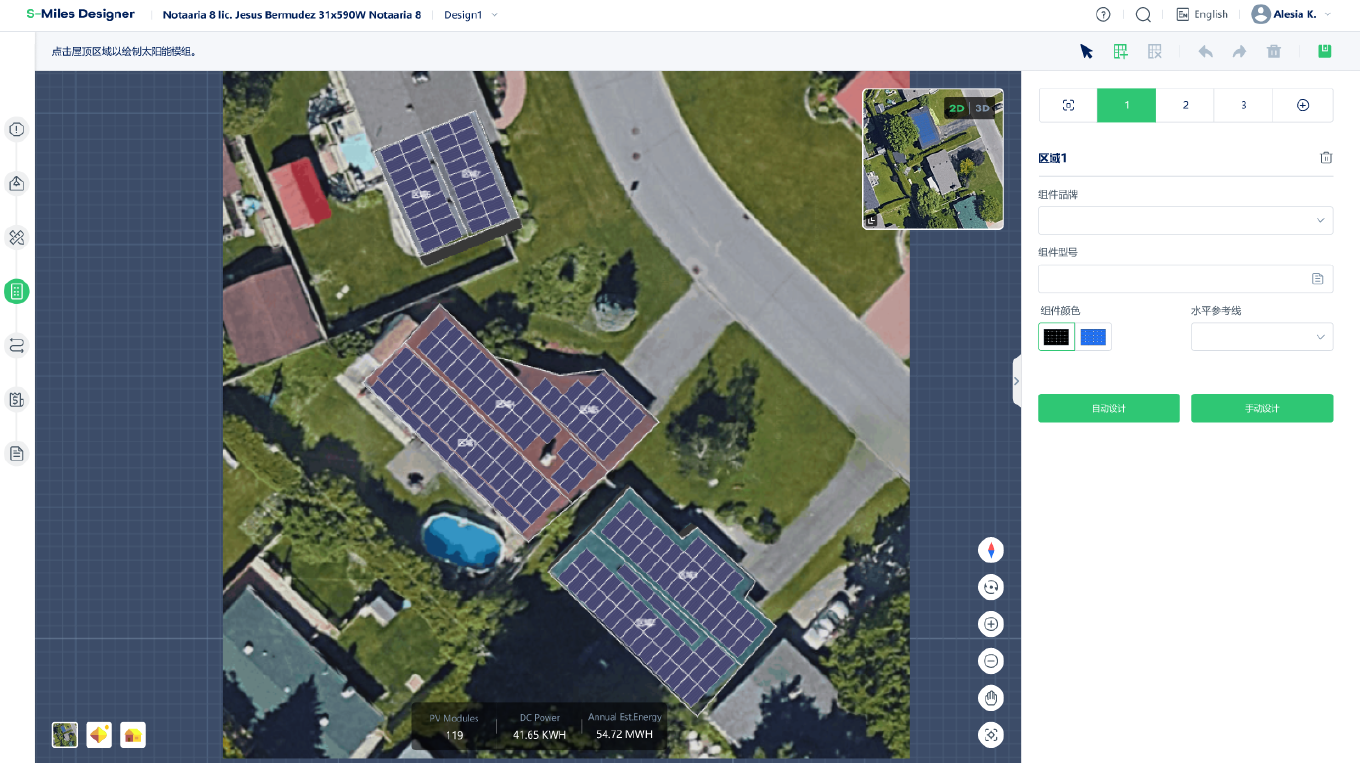
Simulate the actual situation of the photovoltaic module layout, select the specifications, layout, and number of photovoltaic modules, and set obstacles and shading to accurately reproduce the project site to obtain accurate generation data. When selecting photovoltaic modules, in addition to the power of the modules, it should also be considered whether to use double-sided modules, whether the distance between modules is sufficient to avoid self-shading if using a rack, and whether there is enough space for heat dissipation if using a flat layout. All these factors will more or less affect the system's revenue. Through the Hoymiles Smiles-Cloud cloud platform, you can enter the Smiles-Designer system and visually use the drag-and-drop method to arrange the photovoltaic modules, and you can also freely arrange the modules at the module level and set their rack type, direction, height, inclination, and spacing, thus accurately simulating the real situation.
Step Three:Electrical Design
After completing the layout of the photovoltaic modules, determine the number and layout of inverters based on the installed capacity and the preset DC/AC oversizing ratio (inverter-sizing ratio), ensuring that each module is connected to the inverter in an efficient, safe, and economical wiring method.
When selecting an inverter, the first thing to do is to set a reasonable capacity ratio, which refers to the ratio of the installed capacity of photovoltaic modules (DC side) in the photovoltaic power generation system to the capacity of the inverter (AC side). In simple terms, it is the ratio between the total power of the photovoltaic panels and the rated power of the inverter. When the total installed capacity of the photovoltaic modules is greater than the total capacity of the inverter, it is called over-sizing. Appropriate over-sizing is beneficial because, in most cases, the output power of the photovoltaic modules does not reach the nominal power most of the time, which means that the inverter is basically running at less than full load. In this case, appropriately increasing the capacity ratio, i.e., reducing the total power of the inverter, can reduce the investment cost of purchasing the inverter, maximize the capability of the inverter, and avoid waste. Conversely, when the over-sizing ratio is set too high, the inverter may not be able to fully convert the electricity generated by the photovoltaic modules for much of the time—this is known as "clipping," which is also a form of waste.
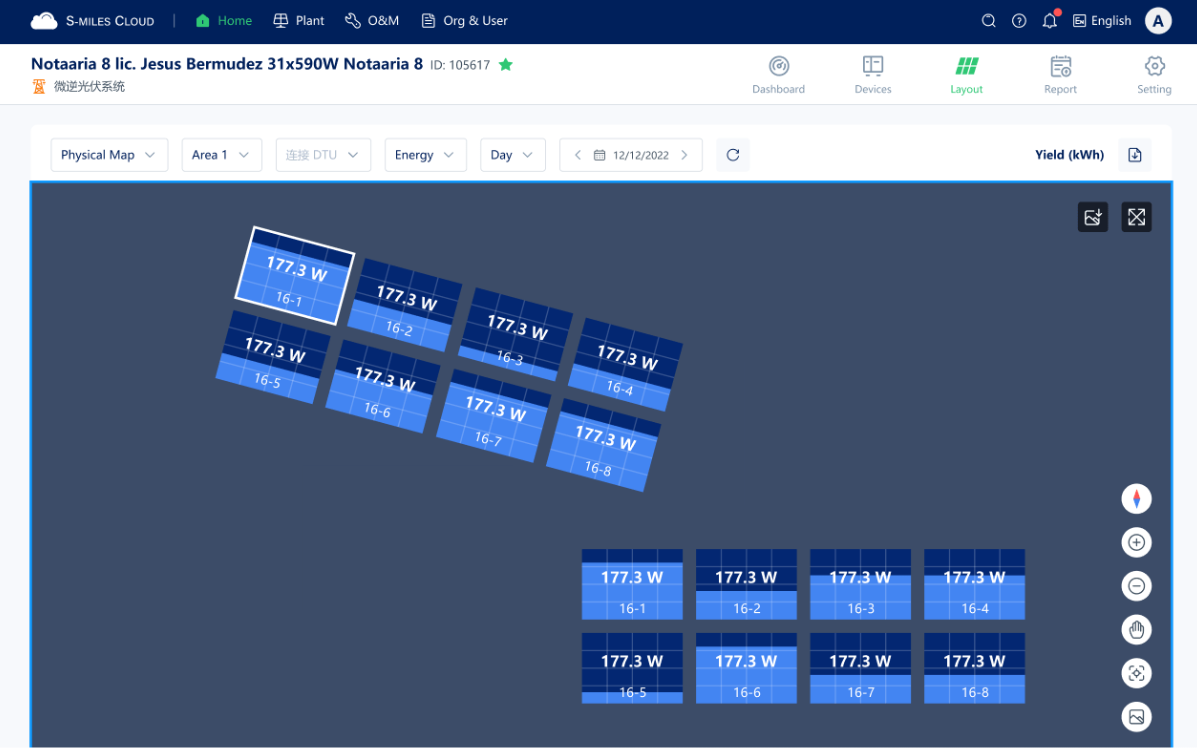
Secondly, it is important to choose safety electrical products that comply with laws and regulations. To avoid disasters caused by inverter fires, in the United States, according to the NEC 2017 policy requirements, all residential installations must be equipped with module-level shut-off devices to ensure that the DC voltage can be reduced to below 80 V after an accident, avoiding rescue risks during a fire. In Europe, legislation has also been passed, mandating that rooftop photovoltaic power generation facilities must be equipped with smart shut-off devices, with the highest voltage not exceeding 60 V. Therefore, choosing a string inverter with a module-level shut-off device or a microinverter with an operating voltage within the safety range has become an inevitable choice for household photovoltaic system. Hoymiles microinverters are connected in parallel with the modules in the system, so there is only about 60 V of DC voltage in the system, which means there will never be high-voltage DC electricity flowing on the user's roof or attic at any time. This is an effect that a string inverter system (regardless of whether it is equipped with optimizers and shut-off devices) cannot achieve, completely eliminating the fire risk caused by high-voltage DC arcing and subsequent rescue risks; at the same time, each module has an independent MPPT (Maximum Power Point Tracking) that can be controlled separately, which not only increases the power generation of a single module but also has module-level shut-off & maintenance functions. By using the S-Miles Cloud web application or APP, you can monitor the photovoltaic system at the module level, not only viewing the real-time output of each module but also keeping track of the system's health status at any time.
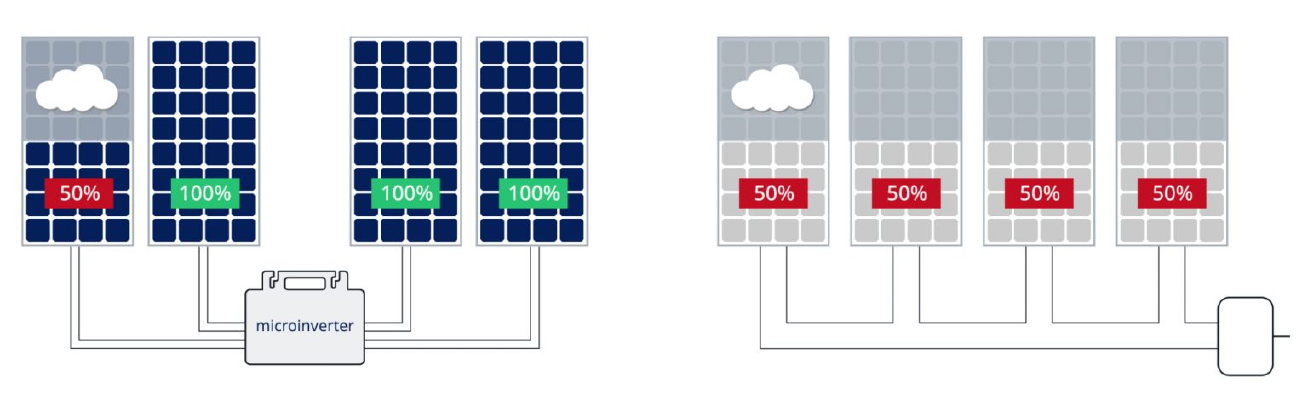
From the perspective of actual installation, if the electricity consumption is large and it is necessary to make full use of the roof area to install photovoltaic modules, then there may be many restrictions when using traditional string inverters. For example, it is usually required that the modules in the same string have the same orientation, because it is well known that when a string of modules has multiple different orientations, the reduced efficiency of one side of the modules will affect the efficiency of the entire string, thereby affecting the efficiency of other modules on the roof with different orientations, which is the so-called string mismatch phenomenon. As a result, some roof areas may be idle and not utilized. The microinverter system is completely different, using a fully parallel circuit design, allowing each module to generate electricity independently without affecting each other, so it can fully and flexibly utilize roof resources. In addition, it is also very important to choose products that are easy to install, which can not only effectively save initial installation costs but may also save later maintenance costs.
In 2023, Hoymiles, as a global leading manufacturer of module-level inverters, launched an innovative installation solution - the HMS New Bus System. This solution is suitable for both multi-inverter photovoltaic systems and single microinverter photovoltaic systems, and can reduce installation time by 70%. The HMS New Bus System uses related accessories to minimize the number of complex procedures and reduce the amount of manual wiring work, eliminating problems caused by improper wiring, ultimately making the installation more in place. In addition, the new solution does not distinguish between male and female heads, avoiding confusion of terminals. It is this plug-and-play design that can achieve a significant reduction in installation time. The HMS New Bus System also provides users with great flexibility, allowing users to use the various accessories of the new bus system to create the most cost-effective wiring solution.
Based on the selection of modules and inverters, and considering the irradiation and other factors that may affect the generation, a comprehensive assessment is carried out. Generally speaking, the main influencing factors are shadows, which are not only caused by trees or other obstacles but also change with the seasons. It is well known that in summer, the sun's angle is higher than in winter, so the shadows generated in summer will be smaller, and the loss of power generation will be smaller, and vice versa, the loss in winter will be greater. In addition, considering the choice of inverter, when choosing a string inverter, if one module in the string is shaded, it will affect the output of the entire string, resulting in a significant decrease in power generation. However, choosing a microinverter can completely avoid this loss.
Step Four:Power Generation Simulation
Based on the selection of modules and inverters, and considering the irradiation and other factors that may affect the generation, a comprehensive assessment is carried out. Generally speaking, the main influencing factors are shadows, which are not only caused by trees or other obstacles but also change with the seasons. It is well known that in summer, the sun's angle is higher than in winter, so the shadows generated in summer will be smaller, and the loss of power generation will be smaller, and vice versa, the loss in winter will be greater. In addition, considering the choice of inverter, when choosing a string inverter, if one module in the string is shaded, it will affect the output of the entire string, resulting in a significant decrease in power generation. However, choosing a microinverter can completely avoid this loss.
Step Five:Financial Analysis
The final but equally important step is to conduct an economic assessment, combining the initial investment of the project, the electricity usage and generation, as well as the purchase and sale prices of electricity, to evaluate the overall project revenue model. Through this model, we can derive the monthly and annual revenue situations, the overall investment return rate of the project, and the investment payback period, etc. The more detailed the parameters we can provide here, the more accurate the economic revenue model we will obtain.