Owning a household/small-scale photovoltaic system generally has the following ways to achieve economic benefits:
1. Photovoltaic power generation for self-use, reducing the purchase of electricity from the grid, offsetting electricity bill expenses.
2. In some regions, by using solar power (during the day) or in conjunction with energy storage (at night) to reduce peak electricity usage, further reducing electricity bills.
3. In recent years, due to the increasing frequency of extreme weather events caused by concerns about climate change, political instability leading to energy crises, and the increasing demand for energy from emerging industries, the annual increase in electricity prices has become a reality. Energy autonomy is not only a safety factor but also an economically significant factor that cannot be ignored.
4. In conjunction with energy storage, charge the battery from the grid when the electricity price is low, and supply power to the load from the battery when the electricity price is high, achieving peak-valley arbitrage.
5. Join a Virtual Power Plant (VPP) and sell electricity through energy storage. As cities and governments seek to increase the level of electrification and reduce carbon emissions, the grid must be prepared to cope with additional power demands while managing a diverse array of sources, including private entities such as businesses and homeowners, as well as utility-scale facilities. VPPs enable the grid to handle this additional load without the need for large-scale infrastructure upgrades, thus reducing costs. Users can also gain corresponding benefits by participating in Hoymiles' VPP program and selling electricity under dispatch—policies and tariffs may vary by region—achieving a win-win situation.
6. Reduce carbon emissions, decrease carbon footprint, and enjoy various tax incentives or tax deductions. These policies may vary by region, and the specific amounts or implementation details may also differ, so homeowners should consult with relevant parties (including local installation service providers) in their area to participate in a timely manner.
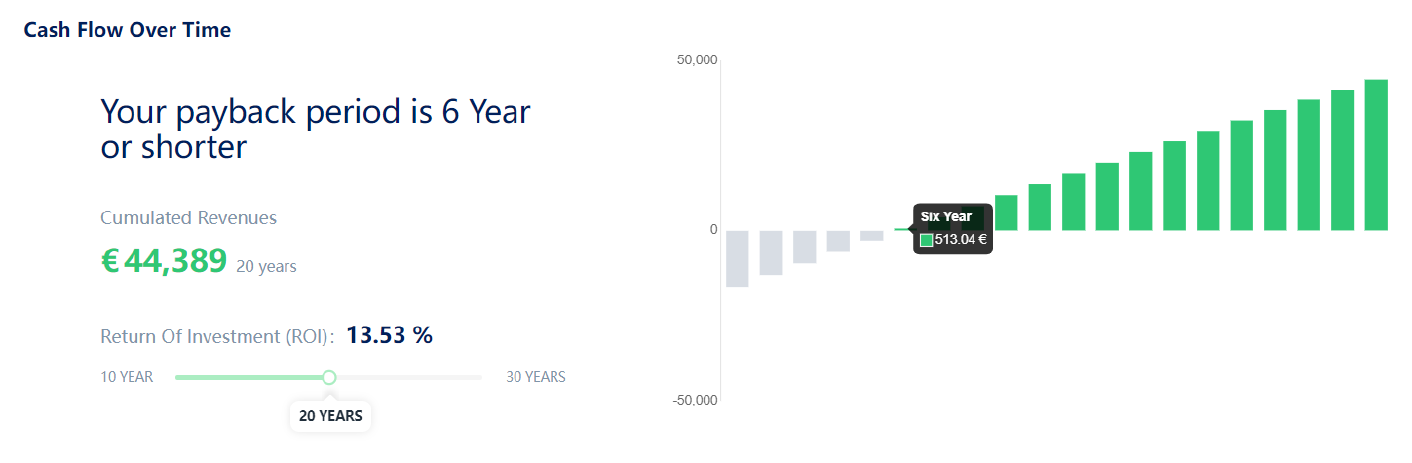
In summary, owning a household/small-scale photovoltaic system has many economic benefits. Generally speaking, the payback period for a standard household photovoltaic system (5 kW) is 4-7 years, and the overall revenue of the system over its lifecycle will far exceed the initial investment amount. Therefore, owning a household/small-scale photovoltaic system is not only beneficial in terms of energy autonomy and environmental protection from the start, but it is also a very wise economic choice. By entering the Smiles-Designer design platform through the Hoymiles S-Miles-Cloud cloud platform and completing the corresponding project configuration, you can comprehensively evaluate the overall investment return of the system and the cash flow based on different years, as shown in the figure below: